
The Complete Guide to Selling an Inherited House in Beloit
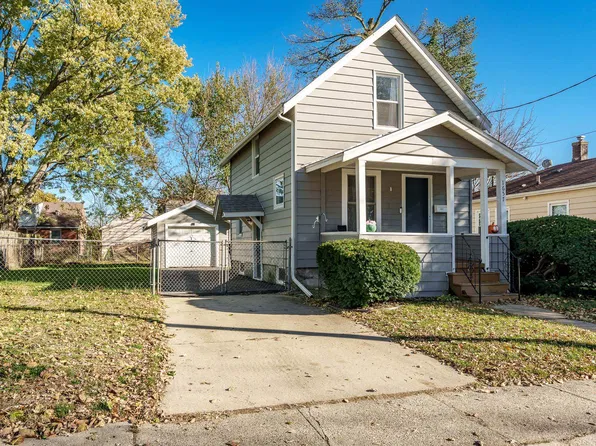
Quick answer: To sell an inherited house in Beloit, first find out who has the legal right to sign. In Wisconsin that depends on how the house was titled: a transfer on death deed or joint tenancy can skip probate, a small estate (under $50,000) may use a Transfer by Affidavit, and most other houses go through probate in Rock County. Once someone has authority, you can keep, rent, list, or sell the house as-is.
Losing a parent or loved one is hard enough. Then comes the house: the keys, the mail, the furnace, the stuff in the basement, and a lot of questions nobody prepared you for.
We're Brenda and Carlos, and we buy houses here in Beloit. We talk with families in this exact spot all the time. This guide explains your options in plain language, including the times when selling to a cash buyer like us is not your best move.
This is general information, not legal or tax advice. Every estate is different, so talk with a Wisconsin probate attorney or tax professional about your situation.
What should I do first after inheriting a house in Beloit?
You don't have to decide whether to sell in the first week. You do need to protect the house and gather a few papers. Start here:
- Get several certified copies of the death certificate. Banks, the county, title companies, and insurance companies will all ask for one.
- Find the will and the deed. The deed shows how the house was titled, which decides whether probate is needed. If you can't find it, the Rock County Register of Deeds keeps recorded deeds.
- Call the homeowner's insurance company. Ask what happens if the house sits empty. Many policies limit coverage on vacant homes, so you may need a different policy.
- Keep the heat on and the pipes safe. A Wisconsin winter can freeze pipes in an empty house fast. Keep utilities on, check the house regularly, or have it winterized.
- Keep paying what's due. Property taxes, the mortgage (if there is one), and utilities don't stop. Keep receipts, since the estate may pay you back.
- Don't clear out or give away belongings yet. Until someone has legal authority, the house and its contents belong to the estate.
- Talk with a probate attorney if the estate is large, there's no will, or family members don't agree.
Does an inherited house have to go through probate in Wisconsin?
Not always. It depends on how the house was titled when your loved one passed. Here are the four most common situations:
How the house was titled | What usually happens | Where it's handled |
|---|---|---|
Transfer on death (TOD) deed naming a beneficiary | No probate for the house. The beneficiary records a Termination of Decedent's Interest form with a certified death certificate. | Rock County Register of Deeds |
Joint tenancy with a survivor | No probate for the house. The surviving owner records the same Termination of Decedent's Interest form. | Rock County Register of Deeds |
Solely owned, total Wisconsin probate property of $50,000 or less | An heir may be able to use a Transfer by Affidavit instead of full probate, then record it. | Rock County Register of Deeds |
Solely owned, over $50,000 (most houses) | Probate. Often "informal" probate through the Probate Registrar if the family agrees, or formal probate with a judge. | Rock County Register in Probate |
What is a Termination of Decedent's Interest?
It's a standard Wisconsin form (often called the HT-110 or TOD-110) that removes the person who passed from the title. It's recorded with the Register of Deeds, along with a certified death certificate and a Wisconsin electronic real estate transfer return. After that, the new owner can sell.
What is a Transfer by Affidavit?
Wisconsin's small estate shortcut. When the probate property is worth $50,000 or less, an heir can sign an affidavit to collect and transfer it. For real estate, the affidavit is recorded with the Register of Deeds, and there are notice steps you have to follow. One catch: a person named as personal representative in the will can't use it to receive real estate. With most Beloit houses worth more than $50,000, this path is less common.
How does probate work in Rock County?
If your loved one lived in Beloit or owned property here, the estate is handled by the Rock County Register in Probate at the Rock County Courthouse in Janesville. Here's the general path:
- Someone applies to be personal representative. That's usually the person named in the will. Without a will, Wisconsin law sets the order.
- Informal or formal probate. Informal probate is supervised by the Probate Registrar instead of a judge, and it's usually simpler when the family agrees. Formal probate goes before a judge and is used when there's a dispute or a complicated will.
- The personal representative gets Domiciliary Letters. This document is proof they can act for the estate.
- Creditors get a deadline. The court sets a date, 3 to 4 months out, for creditors to file claims against the estate.
- The personal representative manages and can sell the house. Wisconsin law lets a personal representative with letters sell estate property without a separate court order, unless the will says otherwise.
- The estate is closed. Debts and expenses are paid, and what's left goes to the heirs. Informal estates are generally expected to close within about 12 months.
The Register in Probate staff can explain procedures, but they can't give legal advice. A probate attorney can.
Who has the right to sign when selling an inherited house?
A buyer, a title company, or a cash buyer can only close with the person who legally controls the house. Who that is depends on the path above:
- During probate: the personal representative signs a Personal Representative's Deed. The heirs don't each sign the deed, though it's smart to keep everyone in the loop.
- TOD deed or joint tenancy: the beneficiary or surviving owner signs, after the Termination of Decedent's Interest is recorded.
- Transfer by Affidavit or after the estate closes: whoever is on title signs. If the house went to three siblings, all three sign.
Can I sell the house before probate is finished?
Often, yes. A personal representative with Domiciliary Letters can usually sell during probate, and the money goes into the estate. What you can't do is sell before anyone has authority. If you're not sure where things stand, ask your attorney or call the Register in Probate.
What about title problems?
Old liens, an unpaid contractor, a missing heir, or a deed that was never updated can all slow a sale. A title company will search the title before closing. The sooner you find a problem, the sooner it can be fixed.
What are my options for an inherited house in Beloit?
You have more than one choice. Here's how the main options compare:
Option | Best when | Timeline | Repairs and cleanout | Trade-offs |
|---|---|---|---|---|
Keep it or move in | Someone in the family wants to live there | Whenever you're ready | Up to you | Others may need to be bought out; you take on taxes, insurance, and upkeep |
Rent it out | You want income and are ready to be a landlord | A few weeks to get ready | Has to meet rental standards | Tenants, repairs, and calls at 2 a.m. We started as landlords with a West Allis duplex, so we know how much work it is |
List with a real estate agent | The house is in decent shape and you have time | Usually longer: prep, showings, buyer financing | Often repairs, cleaning, and staging to get top price | Commission and closing costs, but often the highest sale price |
Sell as-is to a direct buyer | The house needs work, you live far away, or you need it done | Flexible, you pick the closing date | None; you can usually leave unwanted items | The price reflects the repairs a buyer takes on |
When should I list with an agent instead of selling to a cash buyer?
We'll be honest: if the house is in good shape, nobody is in a rush, and the family can handle showings, listing with a good local agent will often get you more money. We tell people that, even when they called us first.
When does a fast as-is sale make sense?
An as-is sale tends to fit when:
- The house needs major repairs, like a roof, foundation, furnace, or old wiring
- It's full of a lifetime of belongings and nobody has time to clear it out
- You live out of state and can't keep checking on an empty house
- Holding costs (taxes, insurance, utilities, winter maintenance) are adding up
- Siblings want a simple, clear number they can split
The best way to decide is to compare real numbers side by side. We use a simple "Your Options" sheet at the kitchen table that compares listing and selling as-is: price, commission, repairs, closing costs, holding costs, and the cash you'd walk away with.
Do I have to fill out a Real Estate Condition Report for an inherited house?
It depends on who's selling. Most Wisconsin sellers of 1 to 4 unit homes must give the buyer a Real Estate Condition Report. Wisconsin law exempts personal representatives, trustees, conservators, and court-supervised fiduciaries, but only if they never lived in the property.
If the house is already in your name as an heir, or you lived there, plan on filling one out. Either way, selling as-is never means hiding problems. If you know about a leaky basement or a bad roof, say so. Ask your attorney or agent which rules apply to you.
Will I owe taxes when I sell an inherited house in Wisconsin?
Wisconsin has no inheritance tax and no state estate tax. The federal estate tax only reaches very large estates.
The tax most heirs ask about is capital gains. Under federal law, inherited property usually gets a "stepped-up basis," which means its value resets to what it was worth on the date of death. If you sell soon for close to that value, the taxable gain is often small. Property taxes owed on the house still have to be paid. A tax professional can tell you what applies to you.
What if my siblings don't agree about Mom's house?
This is one of the hardest parts, and it's more common than people think. A few things that help:
- Get the facts first. A written value estimate and the real costs of keeping the house (taxes, insurance, utilities, repairs) give everyone the same numbers.
- Put every option on the table. One sibling buying out the others, renting it, listing it, or selling it as-is.
- Separate the house from the memories. Agree on who keeps family items before anyone talks price.
- Get a neutral voice. A probate attorney or mediator can help when talks stall.
What does this look like for a Beloit family?
Here's a typical situation (an example, not a real client): a parent passes and leaves a house on Beloit's west side to two adult kids. One lives in Janesville, the other in Arizona. The house is full of belongings and the furnace is old.
They'd likely start by checking the deed. If it was solely owned and worth more than $50,000, one of them applies to be personal representative through Rock County. Once that person has Domiciliary Letters, they get a market value estimate and an as-is offer, then compare the two. If the house needs little work, listing may make more sense. If the cleanout, furnace, and a winter of empty-house costs would eat up the difference, an as-is sale with a flexible closing date may be simpler.
How do I sell an inherited house in Beloit, step by step?
- Secure the house, keep it insured, and keep the heat on.
- Find the deed and the will.
- Figure out the path: TOD or joint tenancy, Transfer by Affidavit, or probate.
- Get legal authority: a recorded termination form, a recorded affidavit, or Domiciliary Letters.
- Talk with the family and agree on goals and family keepsakes.
- Get numbers: a market value estimate from an agent and an as-is offer, side by side.
- Pick the option that fits your situation and timeline.
- Close with a title company and handle the proceeds through the estate, if it's in probate.
Frequently asked questions
Can I sell an inherited house in Wisconsin without probate?
Yes, if the house passed by a transfer on death deed or joint tenancy, or if the estate qualifies for Wisconsin's Transfer by Affidavit ($50,000 or less). Otherwise, most solely owned houses need probate before they can be sold.
How long does it take to sell an inherited house in Beloit?
It depends on the path. A TOD or joint tenancy house can often be sold once the termination form is recorded. In probate, the personal representative can usually sell once they have Domiciliary Letters. An as-is sale can close on a date you choose, while a listing takes longer to prep, show, and close.
Do I have to clean out or fix up an inherited house before selling?
No. If you list with an agent, repairs and cleaning may help the price. If you sell as-is to a direct buyer, you can usually leave the house as it is, including unwanted belongings.
Is there an inheritance tax in Wisconsin?
No. Wisconsin has no inheritance tax and no state estate tax. Federal capital gains rules still apply when you sell, but inherited property usually gets a stepped-up basis to its date-of-death value.
Can I sell an inherited Beloit house if I live out of state?
Yes. Many heirs never come back to Wisconsin for the sale. Documents can often be signed remotely or by mail, and a local attorney, title company, or buyer can help handle the details here.
Do I need a lawyer to sell an inherited house in Wisconsin?
Wisconsin doesn't always require one, especially in informal probate or with a TOD deed. But a probate attorney is worth talking to when there's no will, the estate has debts, or the family disagrees.
What if the inherited house still has a mortgage?
The mortgage still has to be paid while the estate is open. When the house sells, the loan is paid off at closing from the sale money. Call the lender early so they know about the death and can tell you what they need.
About WI Buy Real Estate
We're Brenda and Carlos Sierra, a husband-and-wife team based at Irontek in Beloit, where our dog Mushu greets everyone who stops by. We buy houses across Wisconsin in any condition, including inherited and probate houses, and we close on your timeline.
Mostly, we help families understand their options. If listing with an agent is the better move for your inherited house, we'll tell you. If you'd like to see the numbers side by side, call us at 920-530-5493 or visit wibuyrealestate.com. No pressure, just answers.
Brenda & Carlos, WI Buy Real Estate
This article is general information, not legal or tax advice. Wisconsin laws change, and every estate is different. Please talk with a Wisconsin probate attorney or tax professional about your situation.
Helpful Wisconsin resources
Want to read the rules yourself? These are the official sources we used:
- Wisconsin State Law Library: Probate guide and forms
- Wisconsin Statute 867.03: Transfer by Affidavit
- State Bar of Wisconsin: Transfer by Affidavit instructions
- Wisconsin Statute 709.01: Real Estate Condition Report rules
- Wisconsin Statutes Chapter 859: Creditor claims in probate
- Wisconsin Statute 72.36: No Wisconsin estate tax after 2012